|
|||||||||
|
|
|||||||||
|
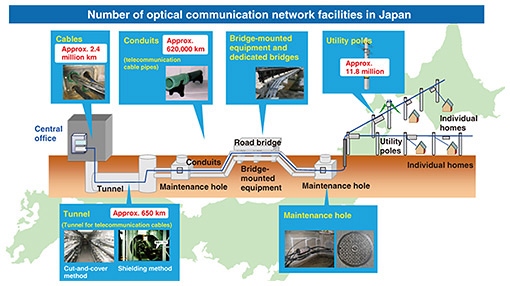
Rising Researchers Vol. 24, No. 3, pp. 13–19, Mar. 2026. https://doi.org/10.53829/ntr202603ri1  Existing Optical Communication Infrastructure Will Lead the Future of Social Contribution through Optical Fiber Sensing TechnologyAbstractOptical fiber sensing technology uses optical fiber, which is normally used for communications, as a sensor to observe changes in vibration, temperature, and other phenomena that occur in Keywords: optical fiber sensing, frequency division multiplexing, distributed acoustic sensing  Optical fiber sensing technology will transform the safety of Japan, a country prone to natural disasters—Would you tell us about optical measurement technologies for environmental monitoring using optical fiber networks? Let me first describe one of my research topics, optical fiber sensing. Optical fibers are now laid nationwide as a communications network that covers 97.09% of Japanese households (as of the end of March 2024) [1]. NTT owns the equipment for laying optical fiber cables throughout Japan and maintains and operates a vast number of optical communication network facilities [2] (Fig. 1). Optical fiber sensing technology uses these cables not for communications purposes but as a type of sensor to determine and analyze the conditions of the optical fiber in terms of environmental factors such as vibrations, temperature changes, and distortion. It thus enables monitoring of various environments around the optical fiber cables installed throughout the country.
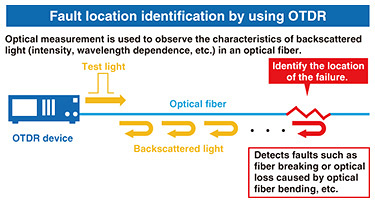
As one device applying this optical fiber sensing technology that we have been researching and developing, an optical time domain reflectometer (OTDR) is used to identify and diagnose abnormalities and fault locations in installed optical fiber. Specifically, an OTDR is connected to one end of an optical fiber cable, a special optical signal is input into the cable, and the backscattered light that is reflected back along the cable is observed and analyzed—in the manner of radar—by using optical measurement technology. It thus is possible to determine the condition of the installed optical fiber cable (such as the location of abnormalities or faults) (Fig. 2).
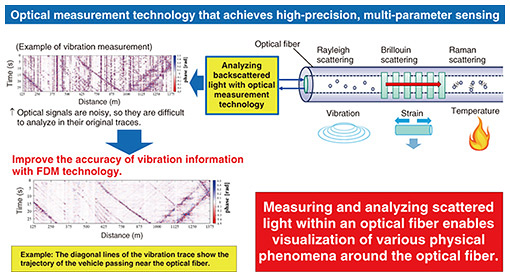
The concept of an OTDR can be taken a step further: the backscattered light can be received with an optical sensor, and the desired signal can be extracted using a special signal-processing method. It therefore becomes possible to monitor conditions, such as vibrations, temperature changes, and distortions, occurring around optical fibers at specific locations. Using NTT’s optical measurement technology called “frequency division multiplexing” (FDM), we can observe and analyze these conditions in even more detail. It thus becomes possible to visualize the environmental conditions around the location where the optical fiber is installed. We call this technology “high-precision optical fiber sensing.” My group is aiming to establish high-precision optical fiber sensing that can measure—with extremely high precision—the condition of optical fibers, which changes slightly due to physical phenomena (such as vibrations and temperature changes) around the optical fiber cable. The advantages of this technology (high-precision optical fiber sensing) are (i) the use of existing optical fiber cables as sensors in a way that eliminates the need to lay new sensors, (ii) it is not electrical, so monitoring is possible without a power supply, and (iii) measurements can be taken remotely, so it is possible to implement round-the-clock monitoring without the need to be on-site. One characteristic of optical fiber cables is that they are often buried underground in urban areas, so if this technology is implemented, it will be possible to observe the underground conditions of the cables in detail. We hope that it will be possible to prevent serious accidents such as the sinkhole accidents that occurred in front of Hakata Station in Fukuoka Prefecture in 2016 and in Yashio City, Saitama Prefecture in January 2025. My research, optical measurement technologies for environmental monitoring using optical fiber networks, involves developing and implementing measurement equipment using this technology and optical measurement methods for observing various environmental changes. Optical fiber sensing is a topic of much research, not only in Japan but also overseas, at other institutions and universities. However, there are not many examples of optical fiber sensing technology being used in existing optical fiber networks. The reason for this lack of utilization is explained as follows. Conventional sensing technologies, such as in plant monitoring (which was an early practical application of optical fiber sensing), measure certain conditions by directly contacting optical fiber with the part to be monitored. For sensing methods that treat existing optical fiber networks for communications as sensors, however, it is difficult for phenomena occurring in the surrounding environment to affect optical fiber cables that run underground. Accordingly, my group is trying to solve this problem by using a signal-processing technology (FDM), which makes it possible to monitor minute changes along the entire optical fiber, which were difficult to observe with conventional technologies (Fig. 3). We have repeated demonstration experiments on FDM technology, which is now one step from practical application. Naturally, we are continuing our research with the goal of implementing it in the real world.
—What prompted you to start this research? I began studying optical fiber sensing when I joined a laboratory studying optical fiber sensing in graduate school. Eight years after joining NTT, in 2018, I transferred to NTT EAST’s Technical Assistance and Support Center, where I was assigned to a department tasked with investigating the causes of “unique faults.” That department handled faults with unknown causes by having technicians visit the site of each fault and using measuring equipment to determine the fault’s cause and address it. While experiencing the actual field and being overwhelmed by its day-to-day complexity, I wished I could use the research on optical fiber sensing that I had done at university. When I returned to the research lab in 2021, I decided to join the optical fiber sensing research group that had been established at NTT. Optical fiber sensing technology is improving day by day, and with the commercialization of distributed acoustic sensing (DAS)* devices, environmental monitoring with installed optical fibers is starting to gain attention. If we could measure a huge optical fiber network as one and visualize an entire city, we could make the most of our strengths as a telecommunications carrier that has a huge amount of optical communication equipment. We are proud to be the only company who can put this technology to practical use—since we are a telecommunications company that is also researching optical fiber sensing technology—and we are advancing our research and development with that strength in mind. —What are the current challenges or problems facing this research? One of our current challenges is that results obtained from optical fiber sensing using existing optical fiber networks depend on location. Although using installed optical fibers is a major cost advantage of this technology, it also presents a problem. That is, optical fiber networks were originally laid for communications purposes and not intended for any other use (like sensing). The installation environment of fiber thus varies widely: some communication conduits are laid underground alongside non-telecommunications infrastructure such as water pipes and power cables; other conduits are laid at depths that depend on road configurations (such as intersections). Therefore, the signals that can be observed, such as vibration and temperature, depend on the installation environment, thus significantly vary. In addition to the above challenge, optical fiber cables are laid inside communication conduits, which are composed of a variety of materials with various thicknesses. Those compositional and dimensional differences cause the signals carried by the fibers to vary, so it is difficult to treat all signals with the same sensor sensitivity, and in some cases, normal results may not be obtained at all. To extract and analyze environmental information about the actual conditions around the optical fiber from optical signals that depend on the fiber’s installation environment, we are studying both technologies for optical fiber sensing and analytical techniques for analyzing the obtained sensing data. If we could understand the installation environment of optical fibers at any location, identify the cause of signal loss, and use advanced signal processing to extract only the phenomenon truly occurring around the optical fiber, we could achieve uniform sensor sensitivity even in a variety of installation environments. In collaboration with members of our research laboratory and NTT Group companies, through various demonstration experiments, we are accumulating analytical expertise while continuously proposing and implementing optimal analytical processing. From the perspective of practical application and widespread use of optical fiber sensing devices, the issue of cost performance remains significant. It is possible to create a highly accurate sensing device if size and cost are irrelevant; however, when considering how to popularize such sensing, we should identify requirements such as miniaturizing the device and ensuring a minimum performance level while keeping costs as low as possible. Other challenges include how to optimize this trade-off between performance and cost and how to coordinate with the companies that manufacture the devices. Our research group has conducted demonstration experiments on (i) telecommunication-facility anomaly monitoring and construction-work detection for telecommunication-facility maintenance applications and (ii) earthquake and ground monitoring and traffic monitoring for non-telecommunication applications. We will continue to demonstrate use cases and accumulate analytical expertise while also improving the performance of optical fiber sensing technology and implementing sensing devices.
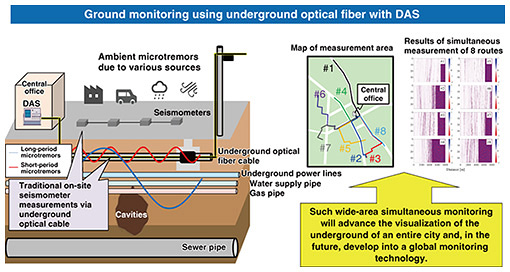
The potential for road-collapse risk assessment and seismic observation is limitless—Tell us about some of the applications and prospects of your research. Optical measurement technology had been researched and developed mainly from the viewpoint of the maintenance of optical fiber lines, which could alone enable significant cost and labor savings. Specifically, if it becomes possible to determine signs of abnormalities in a huge amount of optical fiber equipment in advance, even in cases of on-site investigations that require visual confirmation or in cases of failures and abnormalities that require after-the-fact response after a failure has occurred, it will be possible to visualize equipment that requires detailed inspection. Identifying equipment that requires inspection and prioritizing inspections, for example, could contribute to evening out the workload of inspection workers. Optical measurement technology also has many potential applications besides communications. One example application is a project called “ground monitoring using optical fiber for early detection of risk of road collapse” being jointly conducted by NTT and the National Institute of Advanced Industrial Science and Technology (AIST) [3]. NTT, which has developed high-precision optical fiber vibration-sensing technology, and AIST, which has knowledge of microtremor array survey technology and ground analysis, have decided to conduct a demonstration experiment of a monitoring system for early detection of road-collapse risk (Fig. 4). The purpose of this project is to reduce the risk of sinkholes (like those mentioned previously) by monitoring the ground beneath the road surface, promptly detecting cavities, thus contributing to creating of a safer society. As this ground-monitoring technology advances, it may become possible to verify the safety of large-scale structures and infrastructure to be built on specific ground by conducting prior ground verification.
Earthquake monitoring currently uses various seismometers and crustal-movement sensors installed at intervals of several hundred meters to several kilometers across Japan. However, if it becomes possible to improve observation accuracy by combining the data from these sensors with more dense and vast amounts of optical fiber sensing data, it would become possible to enhance urban disaster prevention and mitigation as well as infrastructure maintenance and management. It would also become possible to monitor traffic volume in real time, visualize road-surface conditions from traffic vibrations, and, for example, decide when and where to remove snow on the basis of road noise emitted by cars driving along snowy roads in Japan’s northern regions. What’s more, we are looking into the possibility of contributing to fields such as applications in earth sciences covering earthquakes, soil, and meteorology. If this technology is put into practical use and spreads throughout the country, we will be able to work with experts in each field to contribute even more to safety and security. —What do you consider important and what is your mindset when conducting your research? It is important to think about everything from different perspectives. That importance is not limited to research; it applies to all obstacles we face in life. While it is possible to overcome an obstacle by attacking it head-on, it is also important to either explore other routes or to change your perspective slightly and sometimes find a way around the obstacle. In other words, try considering various possibilities to move a project forward. Speaking from my own experience, when I entered graduate school, I learned about the laboratory of my mentor, who was researching optical fiber sensing. At that time, in the field of optical communications, scattered light generated within optical fibers was treated as noise, and research focused on how to reduce such scattered light. Our research into using an optical fiber as a sensor by extracting signals from scattered light, which was considered unwanted, was groundbreaking. Optical communications and optical fiber sensing are both research into optical fibers, but learning that a new research field can emerge by changing your perspective was a significant event for me. I also try to combine the strengths of each team member to advance our research. I have had the experience of discovering that what I perceived as a major obstacle was an everyday occurrence for researchers and engineers in other fields, and I realized that they already had countermeasures in place and could solve the problem without any problems. With that experience in mind, I also place importance on communication with others.
—Tell us about NTT Access Network Service Systems Laboratories, where you work. At NTT Access Network Service Systems Laboratories, we pursue research and development with high academic value, such as pursuing the world’s most cutting-edge technologies and developing completely new technologies, while also promoting international standardization activities using the unique technologies we developed. By putting these new technologies into practical use, we aim to support global communications infrastructure technology, including that of the NTT Group, and provide concrete value. As part of these activities, in addition to hosting researchers and engineers, we also invite on-site professionals from not only NTT Group companies but also communications construction companies to spend around two years exchanging ideas. Working in teams with these individuals, we can advance our research while obtaining on-site knowledge that was previously unknown. Our lab thus provides an excellent environment for considering the practical application of technology. Having mainly been researching and developing optical fiber measurement technologies, I pride myself on being an expert in this field. However, as we move forward with the practical application of optical fiber sensing, I realize that my knowledge and efforts alone are insufficient. As we develop and prototype measurement devices and perform various demonstration experiments, we exchange opinions daily with manufacturers of measurement devices and external experts. During those exchanges, we have often encountered things that are difficult for us to understand even though they are commonplace in the industry. I therefore want to promote the practical application and widespread use of our optical fiber sensing technology by combining our respective strengths not only within the NTT Group but also with the many people I may collaborate with in the future. Finally, as a message to young researchers and students, exchanging ideas with people working on research from different backgrounds can sometimes open the way to entirely new research. I thus urge you to be unconcerned about the fact that your research field might be different from communications and come knocking on NTT’s door anyway. I hope that we can combine our strengths and yours and take on the challenge of unprecedented, innovative research and its practical application together. References
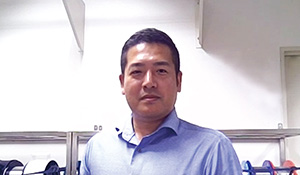
■Interviewee profileHiroshi Takahashi received a B.E in electrical engineering from Tokyo University of Science in 2008, and M.E. in electrical engineering and information systems from The University of Tokyo in 2010. He received a Ph.D. in electrical and computer engineering from Yokohama National University in 2024. He joined NTT Access Network Service Systems Laboratories in 2010 and has been engaged in research on optical fiber sensing. In 2023, he became a distinguished researcher. He is involved in international standardization and serves as an expert in IEC TC86 SC86C WG2. In 2025, he became a visiting professor at the Graduate School/Faculty of Information Science and Technology, Hokkaido University. |
|||||||||