|
|||
|
|
|||
|
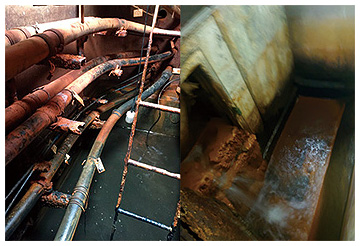
Practical Field Information about Telecommunication Technologies Vol. 24, No. 8, pp. 36–40, Aug. 2026. https://doi.org/10.53829/ntr202608pf1 Multifaceted Analysis of Accumulated Water in Underground Structures of Telecommunication Facilities: Evaluation of Health Risks and CorrosivenessAbstractThis article presents the results of a case study in which a multifaceted analysis of water accumulated in underground structures housing telecommunication equipment was conducted and the risks of the accumulated water affecting workers’ health and equipment corrosion were evaluated. Keywords: underground facilities, water-quality analysis, worker health, corrosion  1. IntroductionTelecommunication equipment is installed in underground structures (basements of telecommunication buildings, tunnels, maintenance holes, pipelines, etc.), and it is common for water to be present around the equipment (Fig. 1). In maintenance holes and pipelines, for example, rainwater and groundwater tend to accumulate around the equipment due to the topography, surrounding water systems, and drainage capacity. At sites where the equipment is under maintenance, it is therefore necessary to ensure the safety of workers and mitigate the risk of equipment corrosion.
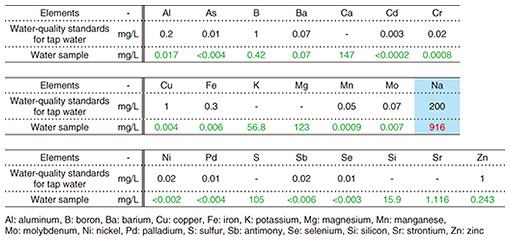
To understand the risks that accumulated water poses to equipment and the maintenance-work environment, water-quality analysis is crucial. Depending on the components in the water, the health of workers may be affected, and components such as chloride ions (Cl−) may accelerate the corrosion of metal materials. Analysis targeting these components is thus necessary. In the case study presented in this article, water accumulated in underground structures housing telecommunication equipment was analyzed from multiple perspectives (including metal components, anionic components, and organic-matter contamination), and the potential health risks and corrosiveness of that water were evaluated. 2. Overview of the case studyOften installed underground, telecommunication equipment tends to be susceptible to the effects of the surrounding environment. Particularly in areas near rivers and reclaimed land, water can accumulate in underground structures. Technical Assistance and Support Center, NTT EAST (TASC) has analyzed water samples collected from many sites housing telecommunication equipment. This article presents the results of a case study in which a multifaceted analysis was conducted to assess the risks of accumulated water affecting workers’ health and equipment components. The following three analyses and evaluations were conducted during this case study: 1. Quantitative analysis of metallic components (cations) using inductively coupled plasma optical-emission spectrometry (ICP-OES) 2. Analysis of anionic components using ion chromatography 3. Evaluation of organic contamination by measuring chemical oxygen demand (COD) 2.1 Quantitative analysis of metallic components (cations) using ICP-OES2.1.1 Overview of analysisEnvironmental water contains trace amounts of metal components, some of which (in certain concentrations) can have harmful effects on the human body. Particularly heavy metals such as arsenic (As) and lead (Pb) are known to cause serious health problems. To assess the safety of workers regarding water accumulated in underground structures, we therefore used ICP-OES to analyze the metal components in the water. 2.1.2 Analysis methodFor the first analysis method, ICP-OES, a sample of water is introduced into a plasma, and the concentration of each metallic element in the sample is quantified from the emission spectrum. In this case study, water that had accumulated in underground structures was collected, and all metal components (cations) potentially present in those environments were measured. The analysis targets included heavy metals such as As, Pb, chromium (Cr), and cadmium (Cd)—which cause concern due to their potential harmful effects on the human body—as well as common metals such as sodium (Na) and calcium (Ca). 2.1.3 Analysis resultsThe results of the analysis by ICP-OES confirmed that heavy metals, including As, Pb, Cr, and Cd, were all below the tap-water quality standards, thus not at levels that would raise health concerns (Table 1). The risk from heavy metals in the water accumulating in the investigated underground structure was therefore assessed as extremely low.
It is noteworthy that the concentration of Na was 916 mg/L, which exceeds the tap-water quality standard (200 mg/L). However, unlike heavy metals, Na has low toxicity, so we considered it unlikely that this concentration would immediately cause health problems. 2.2 Analysis of anionic components using ion chromatography2.2.1 Overview of analysisEnvironmental water contains not only metallic components (cations) but also anionic components, and it is important to evaluate the effects of these cations on telecommunication equipment. Chloride ions are known to destroy protective films on metal surfaces and cause localized corrosion, so they are an important indicator for corrosiveness assessment. To evaluate the corrosiveness of the water accumulated in underground structures in regard to the metal composing the equipment, water samples were thus subjected to anion-component analysis using ion chromatography. 2.2.2 Analysis methodAs an analytical technique for qualitatively and quantitatively analyzing the ionic components contained in water, ion chromatography can be used to measure the concentration of anionic components (such as Cl−, sulfate ions (SO42−), and nitrate ions (NO3) with high precision. In this case study, accumulated water was collected and subjected to quantitative analysis of the anionic components (including Cl−). 2.2.3 Analysis resultsThe quantitative analysis revealed that the Cl− concentration in the accumulated water was 1707 mg/L, which is a high concentration equivalent to about 1/10th of the Cl− concentration in seawater (approximately 19,000 mg/L) (Table 2). This concentration may indicate high corrosiveness compared with that of typical freshwater environments.
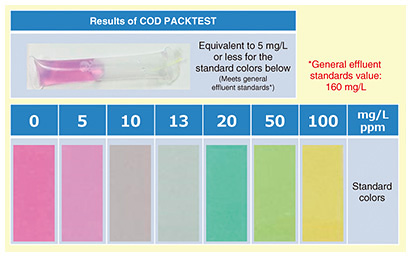
Chloride ions are known to destroy the passive film on metal surfaces, resulting in pitting corrosion and/or crevice corrosion, so they are considered to have a significant impact on ferrous materials and stainless steel. According to the result of the above quantitative analysis, the accumulated water is highly corrosive in regard to metals, so it is necessary to implement countermeasures tailored to the materials composing the equipment and maintenance policies. 2.3 Evaluation of organic contamination by measuring COD2.3.1 Overview of analysisEnvironmental water may contain organic matter as well as metallic and anionic components. Contamination by organic matter must be evaluated because it can affect worker safety in terms of environmental hygiene and resin materials of equipment. Particularly, water containing oil can cause resin degradation and solvent stress cracking. To evaluate the safety of workers and the corrosiveness of water accumulating in underground structures in regard to resin materials composing the equipment, we thus subjected water samples to organic-contamination assessment by measuring COD. 2.3.2 Analysis methodAs an indicator of the amount of oxygen consumed when organic matter in water is oxidized, COD is used to quantitatively evaluate the degree of contamination. In this case study, CODs were measured using the simplified water quality tester PACKTEST. These values were compared with the effluent standards value set by the Ministry of the Environment [1] (maximum 160 mg/L) to determine the presence of organic contamination. 2.3.3 Analysis resultsThe results of the COD PACKTEST indicate that the COD of the accumulated water was 5 mg/L or lower, which is well below the effluent standards value [1] (160 mg/L) (see light-pink column in Fig. 2).
This result suggests that the concentration of organic matter in the accumulated water is low; therefore, the risk of contamination by organic matter is low. The low COD (5 mg/L or lower) also indicates that little oil exists in the water, so the risk of accelerated degradation of resin materials can be considered low. 3. Concluding remarksIn this case study, water accumulated in underground telecommunication facilities was subjected to technical analysis of water quality. The water was evaluated analytically from three perspectives: metallic components (cations), anionic components, and organic contamination. The analysis results indicate that the accumulated water poses little risk to workers; however, they revealed that the concentration of Cl− was high and that finding raises concerns about the corrosiveness of the accumulated water in relation to the metallic components of the underground facility. Regarding analyzing accumulated water such as that targeted in this case study, it is important to consider both the effects on the health of workers (health risks) and the those on the equipment in the underground facility (corrosiveness). These considerations are summarized as follows:
In accordance with these considerations, comprehensive judgment and the formulation of management policies tailored to on-site conditions are required. TASC will continue contributing to solving on-site problems through technical support for those involved in the maintenance and operation of telecommunication facilities. Reference
|
|||