To create novel functional devices offering infinite possibilities
—Would you explain the terms that form the basis of your research, namely, mechanical resonators and optomechanical devices?
A mechanical resonator generally refers to a system composed of mechanical elements (such as springs, masses, and dampers) that undergo periodic reciprocating motion (vibration) when an external force is applied; in other words, it is an artificial structure in which mechanical vibration is sustained through the periodic repetition of elastic deformation.
The vibrating surfaces of instruments such as bells and glockenspiels are types of mechanical resonators. As officially announced by NTT about two years ago, we successfully generated a hybrid state between optically excited electrons, which possess a long lifetime of several milliseconds, and gigahertz-range surface acoustic waves (SAWs), a type of mechanical vibration akin to ultrasound. This state was achieved by fabricating a SAW device (a high-frequency device that filters, resonates, or delays electrical signals by using SAWs) doped with a rare-earth element (erbium) that resonates with light at telecommunication wavelengths. This hybrid state enables the control of rare-earth electrons exhibiting high coherence under low-voltage ultrasonic excitation in a manner that is promising for future applications to energy-efficient optical quantum memory devices (Figs. 1 and 2).
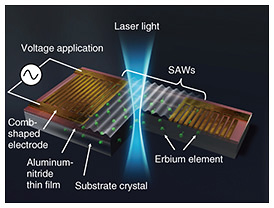
Fig. 1. SAW device with an embedded light-emitting element.
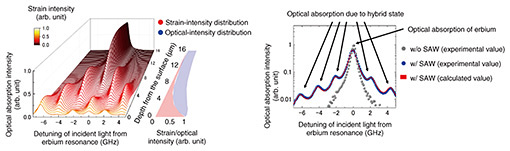
Fig. 2. Optical resonance of erbium impacted by mechanical vibration.
This SAW device uses aluminum nitride—a lightweight piezoelectric material—as a piezoelectric thin film for exciting and detecting vibrations. By narrowing the spacing between the comb-shaped electrodes of the device to 800 nanometers, it is possible to excite high-speed SAWs at 2 gigahertz. Although the strain in the aluminum-nitride crystal generated by SAWs is greatest near the surface of the crystal, it also penetrates to a certain extent into the interior of the crystal. By using this so-called penetrating strain, it becomes possible to apply strain to a light-emitting element embedded within the crystal, thus controlling its light-emission characteristics.
Although we had successfully controlled a light-emitting element embedded within a crystal by using a SAW device, we faced significant limitations regarding the types of emitters that could be embedded; thus, our freedom in terms of device design was constrained. Faced with these challenges in enhancing functionality and versatility, we sought a new approach. During a discussion with researchers from another group at NTT Basic Research Laboratories specializing in polymer materials, an idea emerged: integrate polydimethylsiloxane (PDMS), a silicone-based soft material used for soft contact lenses, with a SAW device. This idea was a true revelation to me, and I immediately launched a research project based on that idea.
—Would you tell us about the creation of a new functional device using minute mechanical vibrations?
Optomechanical devices are attracting attention as functional components that incorporate mechanical degrees of freedom into optical elements (such as light-emitting devices). However, as I previously mentioned, the types of light emitters that can be embedded within the crystal of such mechanical resonators are limited, and that limitation poses significant challenges to achieving higher performance and multifunctionality. To address these challenges, my research focuses on proposing and demonstrating polymer-hybrid SAW devices, which consist of a polymer thin film (prepared by mixing various light emitters into a liquid) placed on a SAW device fabricated on a small crystal fragment measuring just a few millimeters on each side. The aim of this research is to enhance the performance and multifunctionality of optomechanical devices by embedding—within the polymer thin film—various light emitters that would otherwise be difficult to incorporate directly into the crystal of a mechanical resonator (Fig. 3).
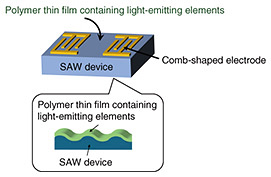
Fig. 3. Illustration of a polymer-hybrid SAW device.
As I previously mentioned, the strain generated by SAWs penetrates into the substrate crystal; however, it is assumed that this strain will also extend into a polymer thin film if one is formed on the SAW-device surface. The aim of my research is to use this effect in a way that subjects light-emitting elements embedded within the polymer to the impact of the strain. To achieve this, the polymer must be thinned to a thickness (a few micrometers or less) that allows for the strain to penetrate sufficiently. It is also required to devise an integration process to incorporate a fine pattern of such a polymer thin film between the two comb-shaped electrode patterns of the SAW device.
—Would you tell us about the difficulties you are facing in your research and the challenges that lie ahead?
Advancing this research requires the preparation of polymer thin films—a task that is far from simple. The polymer-precursor solution used prior to curing is highly viscous, like honey. Therefore, forming films thinner than a few micrometers using techniques such as spin coating presents significant technical challenges. Achieving a specific pattern shape necessitates subsequent processing steps (such as thinning the film and removing unwanted areas via etching), and executing those steps with nanoscale precision is very difficult. The need to develop methods to first overcome these technical challenges is one of the reasons my research is so challenging. Through our efforts to address these challenges, we have recently succeeded in developing a new technology that uses ultraviolet (UV) patterning to create desired shapes from polymer thin films of arbitrary thickness. This technology enables the simple fabrication of PDMS thin-film patterns—ranging from a few to several hundred nanometers in thickness—directly onto substrates, without the need for complex processing steps.
Our next challenging task is determining how to transmit the effects of strain to the light-emitting elements embedded within the fabricated polymer thin film. After undergoing curing, such as exposure to UV light, the polymer transitions into a soft, rubbery solid state. We assume that when the film is in this rubbery state, the effects of strain will not fully reach the internal light-emitting elements. This assumption is based on the fact that the molecular chains constituting the polymer are free to deform; as a result, the strain is dissipated through the deformation of these chains—which act like a shock absorber—in a manner that prevents the effect of strain from reaching the light-emitting elements embedded within the polymer.
In contrast, if a polymer transitions from a rubbery state to a glassy state and hardens, it ceases to function as a shock absorber, and the effect of strain can be transmitted to the embedded light-emitting elements directly. This transition from rubber to glass—known as glass transition—is typically observed when a polymer is cooled; however, a similar phenomenon is expected to occur when mechanical stimulation is applied at a rate exceeding a certain threshold. A comparable principle applies to a powerboat crashing at 200 km/h: an ejected occupant would strike the water surface with a hardness like concrete. In other words, high-speed mechanical stimulation can cause a soft polymer to behave as if it were hard. We are currently working on controlling light-emitting elements embedded within PDMS—a polymer expected to harden under high-speed mechanical stimulation in the gigahertz range—by using mechanical vibrations.
Achieving significant miniaturization and energy savings in the future through multifunctional mechano-electronic/optical devices
—Would you explain the phenomena achieved by this research and its potential applications?
The goal of this research is to implement multifunctional mechano-electronic/optical devices that integrate multiple functions into a single unit. Conventional approaches have achieved multifunctionality by physical integration of multiple elements, which lead to increased device size. However, if this research enables multifunctionality in a single device by blending materials with different functions, it will lead to dramatic miniaturization and energy savings. Beyond device applications, the scientific insights into polymer materials gained during the development process are also important. In particular, the behavior of polymers under excitation in the high-frequency gigahertz range has remained unexplored because of the lack of suitable experimental equipment. In that regard, a major strength of this research is that our approach (fusing with a SAW device with soft materials) makes it possible to investigate this behavior. This research presents a groundbreaking approach that introduces a new evaluation criterion—high-frequency response—to the field of materials science, which had previously been limited to research concerning the low-frequency range (below the megahertz level). While this research remains at the proposal stage, our initial goal is to establish a system capable of evaluating the mechanical response and dynamic viscoelasticity of PDMS in the megahertz-to-gigahertz frequency range within the next three years. Then, looking five years ahead, we aim to enable the mechanical control of various light-emitting elements; in particular, we hope to create, by the first half of the 2030s, a completely new type of multifunctional mechano-electronic/optical device that integrates different types of light-emitting elements.
—What do you value most when conducting your research?
I don’t have a particular motto, but if I had to choose one, it would be “Let’s do something no one else has done before.” I do not harbor any grandiose ambitions about doing something that serves a greater purpose for others; however, I find it deeply rewarding to pioneer new territory—exploring matters that nobody knows anything about or trailblazing untapped fields. I believe that if I can participate in the process of, in a sense, writing a new page in a textbook, it will be a highly meaningful endeavor for me. As I proceed with my research, I will make it a point to try to enjoy everything. People often talk about hitting a wall or overcoming obstacles, but in the world of basic research, it feels like there is nothing but walls. This situation feels less like a wall is something to be overcome and more like something you run into no matter which direction you head. Advancing research by a single step gives rise to new problems. You somehow manage to solve one problem and take a step forward, only for a new problem to arise. This situation is the reason that unless you adopt a mindset of enjoying the process of hitting a wall, it is difficult to keep going in the long run. For basic research, unless you have a positive mindset and certain degree of mental thick-skinnedness, you’ll end up being “crushed” by those around you.
—Would you tell us about NTT Basic Research Laboratories, where you are affiliated?
Although NTT Basic Research Laboratories is an organization within a corporation, it possesses a unique structure that resembles a collection of university research laboratories. Its diverse research fields range from semiconductors and electronic/optical properties to biomimetic technologies and quantum technologies. Unusually for a private-sector research institute, its most distinctive feature is that it specializes in basic research rather than focusing solely on short-term product development. In Japan, few companies still maintain their own basic research laboratories. The quality of our experimental equipment and other facilities is a level above that found at universities, so I believe it is a true asset. The Laboratories is thus a fitting environment for anyone who’s truly interested in pursuing basic research. A crucial mission of the Laboratories is to take on challenges that no one else has attempted and publish the subsequent research findings in academic journals. All our researchers are enthusiastic about “creating new textbooks.”
While NTT as a whole currently encourages remote work, the Basic Research Laboratories are an exception; that is, since the experimental apparatuses and facilities are located on-site, many employees are exempt from this policy. Naturally, I need to be present for experiments, but as a research group leader, I also come into the office every day to handle tasks such as staff safety management and research support.
—Finally, what is your message to researchers and students?
The results of basic research do not immediately manifest as tangible metrics, such as a doubling of data traffic or percentage-point gain in efficiency. Basic research stands apart from the kind of practicality that offers immediate utility. However, the new insights and nascent technologies born of such inquiry hold the potential to transform future industrial structures and the landscape of academia fundamentally. I believe the true significance of basic research lies in sowing the seeds that will underpin future progress and enable growth that transcends mere quantifiable figures. I’ve noticed a tendency among young researchers to prioritize achieving quick results and building a track record as soon as possible. While this inclination certainly has its merits, certain vital research projects require a long-term, steadfast commitment to yield results, and the neglect of such work represents a downside. I particularly want young researchers—who hold the key to the future—to embrace a mindset of taking on challenges without fear of failure. As a basic researcher myself, I intend to cherish this approach.
Although the interdisciplinary research that I’m currently pursuing is highly challenging, it holds the potential for breakthroughs in a manner that makes it deeply rewarding. I believe that incorporating insights from experts across various fields is crucial when conducting such interdisciplinary research. Active engagement with international colleagues is also vital; for instance, my group frequently hosts student interns from countries such as the USA, France, and the Netherlands in a way that fosters interactions among researchers that transcend age differences. These students are exceptionally talented, and our collaborations often lead to published research papers. I hope that such human connections—crossing boundaries of age, nationality, and academic discipline—will spark new insights and inspiration and ultimately help us “write new pages in textbooks.”