|
|||||
|
|
|||||
|
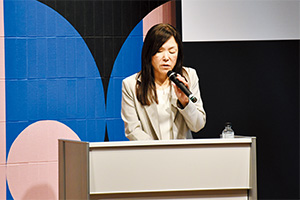
Information NTT Communication Science Laboratories Open House 2026AbstractNTT Communication Science Laboratories held Open House 2026 at QUINTBRIDGE and PRISM in the NTT WEST i-CAMPUS in Kyobashi, Osaka, from May 20 to 22, 2026. The program featured one invited talk, three research talks (the research talks each presented twice), for seven sessions in all, and 22 research exhibits. Cumulative attendance reached 1526, approximately 40% more than the previous year. A seminar aimed primarily at students complemented the program. This article reports on the talks and exhibits, improvements to the visitor experience, and efforts to engage universities and students more closely. Keywords: information science, human science, artificial intelligence  1. Overview of Open House 2026Since its founding, NTT Communication Science Laboratories (CS Labs) has pursued basic research into the nature of humans and information, with the aim of enabling communication that reaches the heart, whether between people or between people and computers. Its annual Open House gives visitors an opportunity to see, touch, and experience the latest research results. The event was held online from 2020 through 2022. In 2023, in-person exhibits resumed at QUINTBRIDGE, NTT WEST’s open-innovation facility in Osaka. Since 2024, the adjacent PRISM facility has also hosted parts of the in-person program. Under the theme “Unraveling the Mind and Intelligence, and Weaving an Interconnected World,” Open House 2026 ran from May 20 to 22. QUINTBRIDGE hosted one invited talk and three research talks (the research talks were each delivered twice) for a total of seven sessions, while PRISM hosted 22 research exhibits. A seminar aimed primarily at students was also held to help university students and other academic visitors gain a closer view of research careers and opportunities for joint research. As in the previous year, visitors reserved time slots for talks and exhibits in advance; a new system also enabled them to change or cancel reservations. Cumulative attendance reached 1526, up approximately 40% from 1078 the previous year. Including the seminar, talks drew a total audience of 796, averaging about 100 per session [1]. 2. Invited talkThe invited speaker was Chieko Asakawa, Project Professor at Keio University, IBM Fellow Emerita, and Chief Executive Director of the National Museum of Emerging Science and Innovation (Miraikan) (Photo 1). Her talk, “Research and Development of the AI Suitcase and the Challenge of Social Implementation – Toward the Future of Mobility Support –,” described her work on the AI Suitcase, a suitcase-shaped navigation robot. After developing a digital braille system and a voice browser to improve information access for people with visual impairments, she has turned to researching and deploying a navigation robot that supports their independent travel in the physical world. The AI Suitcase uses LiDAR (light detection and ranging) and cameras to detect nearby obstacles and pedestrians and guides a user to a destination via its handle. By extending accessibility from information to everyday mobility, including walking around town and shopping, the AI Suitcase project seeks to enable people with visual impairments to choose where they go and participate in society on their own terms. Alongside the research history, Asakawa discussed challenges identified through user trials, including safety, ease of use, and coexistence with other people in shared spaces. Putting the AI Suitcase into everyday use requires more than better robot performance. Traffic rules, legal frameworks, accessible information about the built environment, and cooperation among local governments, businesses, and universities also matter. Asakawa described an open-source approach that expands both trial settings and participation, with the goal of providing sustainable mobility support to individuals. Her talk prompted many questions and offered an opportunity to consider how research and society can work together to expand what people can do.
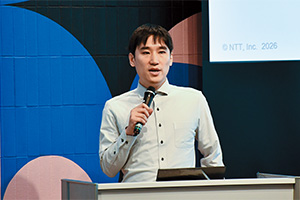
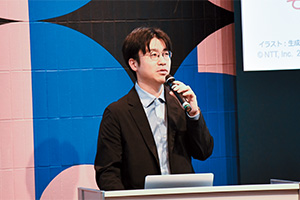
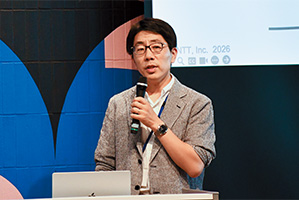
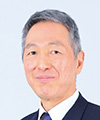
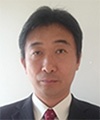
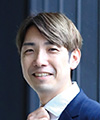
3. Research talksThree topics were selected from CS Labs’ latest research achievements for the research talks: the human mind and body, future healthcare, and the prediction of events in society. Each talk was presented twice. Visitor surveys indicated high satisfaction with all three talks and found their level of difficulty generally appropriate. In the talk entitled “Science of the Brain and Body behind Winning—Uncovering Neural and Physiological Mechanisms of Winning and Losing in Esports,” Sorato Minami (Human Information Science Laboratory) presented research using esports, in which biological signals can be measured precisely even during competition. He described brain activity that emerges before an outcome is decided as well as physiological states that distinguish experienced players from elite players (Photo 2). The research uses data to identify states associated with success when players are closely matched, with the aim of supporting mental preparation and performance. In the talk entitled “Digital Organoid: Frontier of Bio-medical Science—Digitalized Biological Models to Realize Better Medicine and Health,” Kenji Komiya (Media Information Laboratory) introduced research that combines measurements from organoids, which are artificially grown tissue structures, with information-processing methods to infer the structure of cell differentiation and interactions among cells as digital models (Photo 3). He discussed their potential as foundational technologies for new approaches to healthcare, including selecting drugs for individuals and designing artificial tissues. In the talk entitled “Understanding, Predicting, and Controlling Event Timing—Event Time Series Analysis Using Point Processes and Machine Learning,” Hideaki Kim (Innovative Communication Laboratory) introduced methods for analyzing the timing of irregular events, such as equipment failures, store visits, and illnesses (Photo 4). Understanding how such events arise and predicting their occurrence could support preventive maintenance and the design of more effective interventions. Recordings of the research talks are currently available on the Open House 2026 website (in Japanese only) [2].
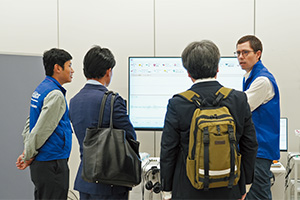
4. Research exhibitsThe 22 exhibits spanned four categories: Machine Learning Science, Media Information Science, Communication and Mathematical Science, and Human Science. Researchers used panels and demonstrations to explain their work and discuss its potential and applications with visitors (Photo 5). Exhibit 02: Estimating cellular interactions from patterns, and exhibit 12: Material perception through vision, were also the subjects of press releases and attracted considerable media coverage. The exhibit titles and subtitles are listed below, following the official English program [1]. 4.1 Machine Learning Science (seven exhibits)01. Seeking to capture the growth trajectory of cells—Interactive hypothesis testing on cell differentiation 02. Estimating cellular interactions from patterns—Modeling biological development with agent simulation 03. Towards energy-efficient AI models—Integrating sparsity and quantization for model compression 04. Do not compute: Fast approach for vector search—Accelerating ScaNN via pruning-based vector quantization 05. Fast and accurate event timing prediction—Event time analysis via point processes and machine learning 06. Who is affected by this policy, and why?—Accurate, interpretable statistical causal effect estimation 07. Evaluating uncertainty in the probability estimation—Variance computation for probabilistic inference outcome 4.2 Media Information Science (five exhibits)08. Listening to what you want!—Real-time selective listening of everyday sounds 09. Providing a diverse range of appealing voices—An idol voice dataset for research on speech generation AI 10. Were you able to thoroughly disinfect the entire area?—Evaluation of disinfection activities using thermal camera 11. 3D world captured by humans and AI—Comparing depth estimation bias using large-scale human data 12. Material perception through vision—Vision-based methods for conveying softness and stickiness 4.3 Communication and Mathematical Science (five exhibits)13. Solving open problems in arithmetic dynamics—Partial resolution of Morton-Vivaldi’s conjecture 14. Can you trust these search results?—Hub text identification for cross-modal embeddings 15. How is envy depicted in picture books?—The effectiveness of picture books for emotional education 16. How was that story?—An AI system for talking about picture book impressions 17. Measuring cognitive and affective empathy—Dataset construction and analysis for both empathy types 4.4 Human Science (five exhibits)18. What do circular leg movements tell us?—Smartphone-based foot skill and postural control evaluation 19. The essence of winning revealed through esports—In-match biosignals predict win/loss and assess expertise 20. What mind-body states drive elite victory?—Individualized hormone–performance relationship and regulation 21. Understanding the mind from eyes and brain in the wild—Scaling mind reading beyond the lab 22. How people make sense of non-realistic virtual worlds—Examining how a sekai-kan is formed in the human mind
5. Closing remarksFor Open House 2026, we retained the previous year’s in-person format and advance reservations while improving the booking system, enriching the talks and exhibits, strengthening outreach to universities, and expanding publicity efforts to include social media. These efforts brought many people to the event. Visitors appreciated the clear, thoughtful explanations of the research and the chance to speak directly with researchers. For CS Labs researchers, the event was also a valuable opportunity to discuss the value and future of their work with people from a range of fields and backgrounds. We sincerely thank everyone who helped make the event possible. We hope you will continue to follow our basic research into people and information and the new possibilities that emerge from conversations with researchers. References
|
|||||